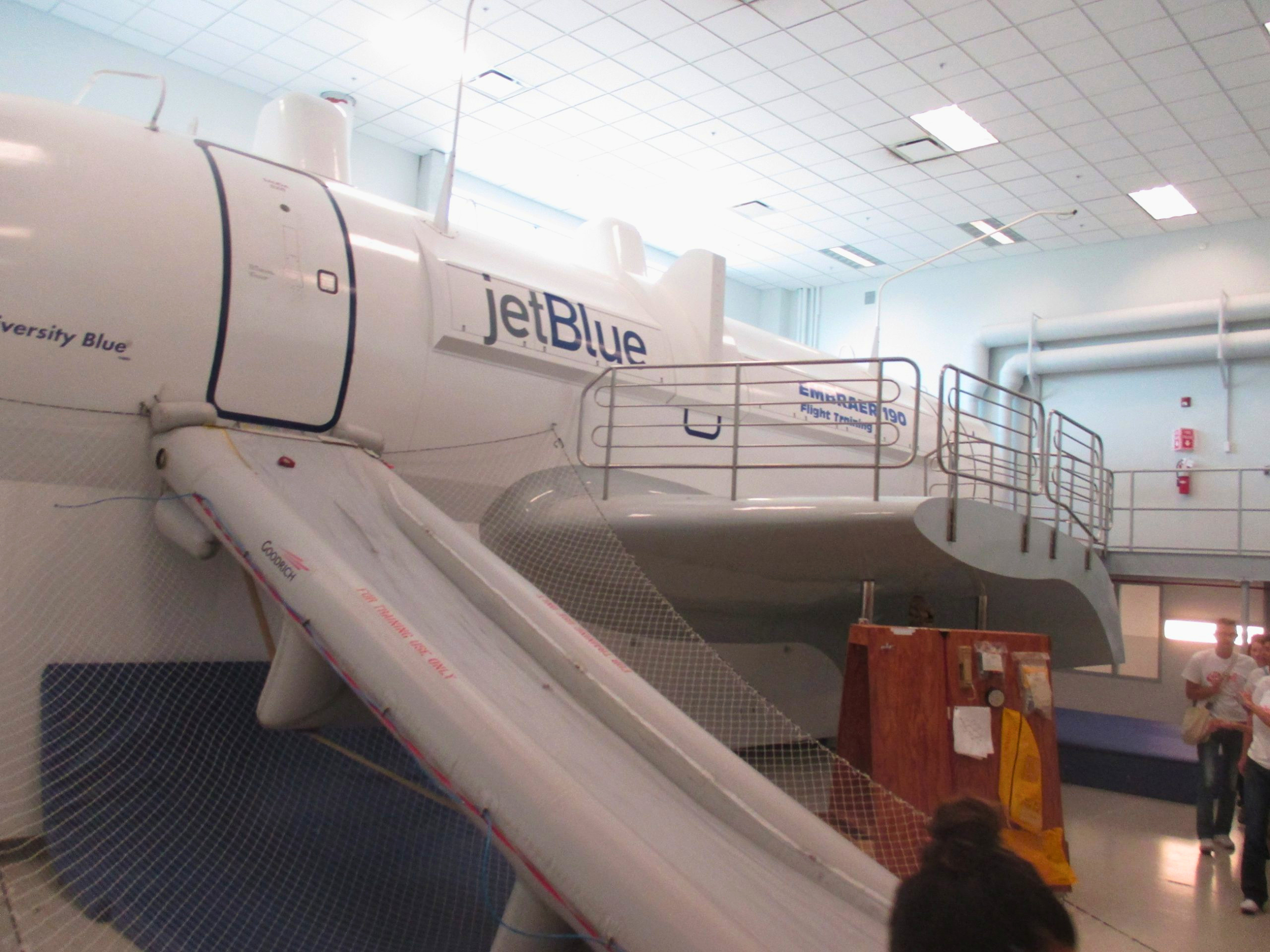
If you want to become a flight attendant, you will quickly discover that airline employees have their own vocabulary. Learning some common aviation terms before training can make your first days feel less overwhelming. You will recognize words used for parts of the airplane, safety procedures, crew schedules, and everyday work. More importantly, you can spend less time wondering what a word means and more time understanding what you are being taught. Here you will learn 15 aviation terms that can give you a useful head start before flight attendant training.
Learn These 15 Aviation Terms Before Flight Attendant Training
1. Galley
The galley is the kitchen area of an airplane. It is where flight attendants prepare drinks, organize food, store service supplies, and get carts ready for cabin service. Your training may teach you how to work safely and efficiently in this small space.
The galley may look simple when you are a passenger, but flight attendants need to know where things belong and how to work around other crew members. Knowing the word before training gives you one less basic term to learn when you arrive.
2. Jumpseat
A jumpseat is a collapsible seat used by a flight attendant or another authorized person. Flight attendants use assigned seats and restraint systems during important parts of a flight, including takeoff and landing. FAA training materials also include checking the flight attendant jumpseat and its restraint system among preflight duties.
When you hear “jumpseat” during training, remember that this is more than a place to sit. It is part of the flight attendant’s working environment and safety responsibilities.
3. PAX
PAX is a common abbreviation for passengers. You may see or hear it when airline employees discuss the people traveling on a flight. Your study materials, for example, use PAX when defining the cabin, aircraft load, and other airline terms.
This is an easy term to learn ahead of time. When an instructor uses “PAX” during a lesson, you will immediately understand who they are talking about instead of stopping to figure out the abbreviation.
4. Cross-Check
A cross-check is a safety verification performed by cabin crew members. Your source material describes cross-checking as checking that an assigned aircraft door has been properly armed for departure or disarmed after arriving at the gate.
This is a good example of why airline vocabulary matters. Some terms refer directly to procedures that help keep passengers and crew safe. During professional training, you can learn not only what these words mean, but also the procedures and responsibilities connected to them.
5. Arm And Disarm
“Arm” and “disarm” are important terms connected to an aircraft’s emergency evacuation slides. Arming prepares the slide system for emergency use. Disarming returns it to its normal non-emergency state when appropriate.
You do not need to teach yourself how to operate an aircraft door before training. In fact, procedures can vary by airline and aircraft. Your goal right now is simply to recognize the language. Professional training is where terminology becomes connected to the correct procedures and hands-on responsibilities.
6. Demo
“Demo” is short for the passenger safety demonstration. Your materials describe demo equipment as items such as an oxygen mask, seat belt, life vest, and safety information card used during a passenger safety demonstration.
The safety demonstration is an important part of a flight attendant’s responsibilities. FAA guidance says passengers should pay attention to the safety briefing because it provides important information about emergency procedures and equipment. When preparing for training, remember that the job has a strong safety focus.
7. Flight Deck
The flight deck is the area where the pilots operate the airplane. You may also hear it called the cockpit, but “flight deck” is a common industry term.
Flight attendants and pilots have different responsibilities, but communication between the cabin and flight deck is important. FAA guidance explains that preflight briefings help crews share information and establish a common understanding before a flight. Learning basic aviation vocabulary can make that type of communication easier to understand during training.
8. Crew Briefing
A crew briefing is a meeting held before a duty period and when certain crew or aircraft changes occur. During a briefing, crew members may discuss information they need for the flight.
The FAA describes the preflight briefing as an important part of good coordination between flight attendants and the flight crew. Topics can include weather, passenger information, security concerns, maintenance issues, and communication procedures. As a future flight attendant, getting comfortable listening carefully and sharing information clearly can help prepare you for this teamwork.
9. Deadhead
Deadheading means a flight attendant travels from one location to another at the direction of the airline, such as traveling to perform a later assignment or returning from duty. In this situation, the crew member is traveling rather than working that particular flight as an operating flight attendant.
You may hear this term when learning about airline schedules. Understanding it ahead of time can make conversations about trips and assignments much easier to follow.
10. Base
A base is the city designated by an airline where crew members begin and end their trips. You may also hear the term “domicile” used for the city where flight attendants and pilots are based.
Your base can become an important part of your working life because your assigned trips generally connect back to it. When researching a flight attendant career, learning how bases work can help you better understand scheduling, commuting, and where your job may require you to report.
11. Bidding
Bidding is the process flight attendants use to request scheduling preferences. Depending on an airline’s system, bids may involve schedules, vacation time, aircraft positions, or base preferences, with seniority affecting how requests are awarded.
You do not need to understand every scheduling rule before training. Just knowing that “bidding” has a specific meaning in the airline world can help. Once you begin professional training and eventually work for an airline, you can learn the rules that apply to your employer.
12. Reserve
Being “on reserve” generally means a flight attendant must be available to cover an assignment when needed rather than having every trip known far in advance. Your provided material describes reserve flight attendants as being available to fill trips or rotations at the last minute.
Reserve can be an important part of understanding what the early stages of a flight attendant career may look like. It requires flexibility and preparation because your schedule may be less predictable than you are used to.
13. Leg Or Segment
A leg, sometimes called a segment, refers to one portion of a trip between two destinations. Your training material defines it as the flight between block out and block in at two destinations.
A workday can involve more than one leg, so this term comes up when people discuss flight schedules. When someone says a crew has another leg to work, they are talking about another flight segment rather than an entirely separate career assignment.
14. Layover
A layover is time spent in a city between duty days, usually overnight. For flight attendants, a layover is part of a work trip rather than simply vacation time in another city.
This is one of the more familiar aviation words, but it helps to understand it from a crew member’s point of view. Your schedule, rest, transportation, and next report time all matter. Learning about the daily realities of airline work can help you decide whether the career fits the lifestyle you want.
15. Pre-Flight Check
A pre-flight check is performed by flight attendants to make sure required emergency equipment and certain aircraft systems are ready and in proper condition. FAA reference materials include checking emergency equipment such as flight attendant restraints, oxygen equipment, fire extinguishers, and first aid supplies among flight attendant ground duties.
This term is a useful reminder of what being a flight attendant is really about. Passenger service matters, but safety is the main responsibility. The FAA says flight attendants receive initial training in areas including evacuations, firefighting, first aid, passenger safety, and cabin decompression.
How Can You Learn Aviation Terms Before Flight Attendant Training?
Start small. You do not need to memorize an entire aviation dictionary before your first day of training. Write these terms on flashcards or save them on your phone. Put the term on one side and explain it in your own words on the other. Review a few at a time until recognizing them feels natural.
Then focus on understanding rather than memorizing. Ask yourself where you might hear each term and why it matters. “Galley” describes part of the aircraft. “Deadhead” relates to crew travel. “Cross-check” connects to safety procedures. Grouping terms by how they are actually used can make them easier to remember.
Most importantly, do not try to teach yourself every airline procedure from online definitions. Terminology is only the starting point. Professional career training can give you structure, explain how these ideas fit together, and help you practice skills in an environment built around preparing for airline work.
Contact The Airline Academy
Knowing terms like galley, jumpseat, PAX, cross-check, deadhead, base, and pre-flight check can give you a useful head start. Still, knowing vocabulary is very different from knowing how to work as an airline professional. Flight attendants have real safety responsibilities, and professional preparation can help you understand what employers expect before you begin applying for jobs.
At The Airline Academy, we have helped prepare students for airline careers since 1972. We offer accelerated flight attendant and airline customer service training for adults who want a practical path into the industry. Our programs can be a good fit whether you are a recent high school graduate, college student, career changer, military veteran, or simply ready to pursue a travel-focused career. We also provide hands-on training, career placement support, and guidance through the airline hiring process.
You do not need to walk into training already knowing everything. That is what training is for. Building some basic knowledge now can help you arrive feeling more prepared and ready to learn.
Want to find out whether airline career training is right for you? Call us at 800-798-0202 to learn more about The Airline Academy and your next steps.